2024 BOOK TOUR IN SLOVENIA
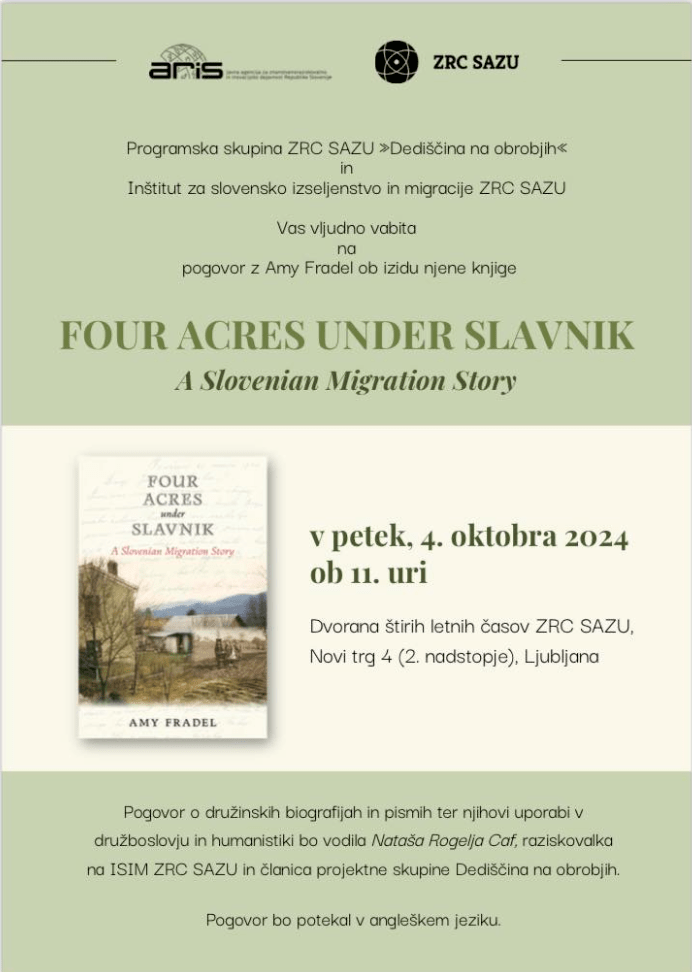
While on vacation in Koper, Slovenia in 2022, I stopped into the history department of the University of Primorska to ask if anyone might be interested in talking to me about my book in progress. That is how I came to meet Aleksej Kalc and Miha Zobec, historians and members of the Slovenian Migration Institute, and receive an invitation to present my published book in Slovenia.
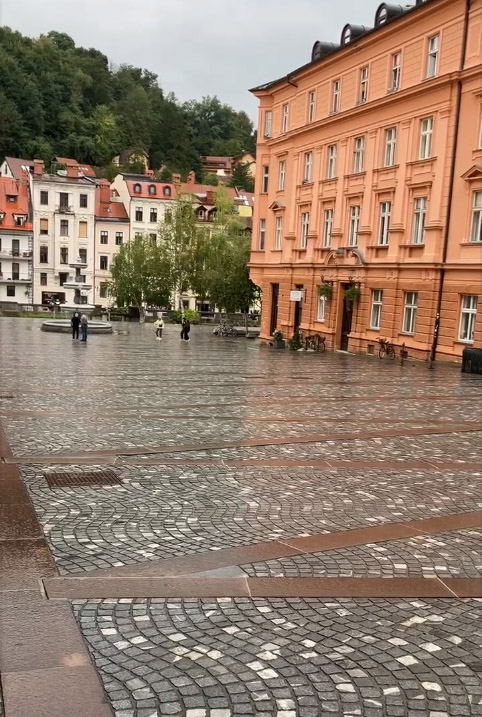
As the day approached for my first presentation. I felt like an Imposter. Am I just an American nurse practitioner doing a genealogy project? Who am I to tell Slovenians their history? I arrived at the Slovenian Academy of Sciences and Arts, a prestigious and beautifully renovated institution in the heart of Ljubljana near Prešeren Square two days before my presentation to have coffee with Nataša Rogelio, an anthropologist from the Slovenian Migration Institute, and she put my fears to rest.
Slovenians are deeply interested in the experience of their people who left the homeland and I possessed an authentic, deeply personal, historically accurate story of migration as experienced by those who left and those who stayed that spans four generations. My family in Slovenia told me that I knew more about the family than they did because after WW2 people did not talk about the past. They enthusiastically joined my research. I knew my grandparents and Jožef, their grandfather, better than anyone else. I had read all Jožef’s letters, intimate ones meant to be read only by his beloved sister. I knew how he felt about his wife, his mother, his children, his neighbors, his hopes, fears, and politics. I understood his obsessions about rain and drought and late frosts. I know how he felt when the Italians practiced shooting cannons in his fields, and neighbors who had been targeted by the Italian police, slipped away to Maribor. It is a powerful story of ordinary people, whose lives were altered in catastrophic economic, violent, and political times, that needed to be told. I felt that my ancestors had appointed me to tell their story. I was their spokesperson, not an imposter.
The authenticity of my story has a strong appeal to Slovenians at many levels. The experience of losing just one family member to economic emigration, or losing dozens from your village for political reasons, changed village culture forever. The direct effect of historical events on the lives of ordinary people can be viewed as just a story or give a deeper meaning to history and current events. The questions raised by Nataša and my other audiences increased my awareness that my book is a treasure for people with different interests and in many disciplines and opens new avenues for research. Many Slovenes have read my English version. One cousin took a picture of every page with Google translate. Hopefully, one day she will read it in Slovene and make better sense of it.
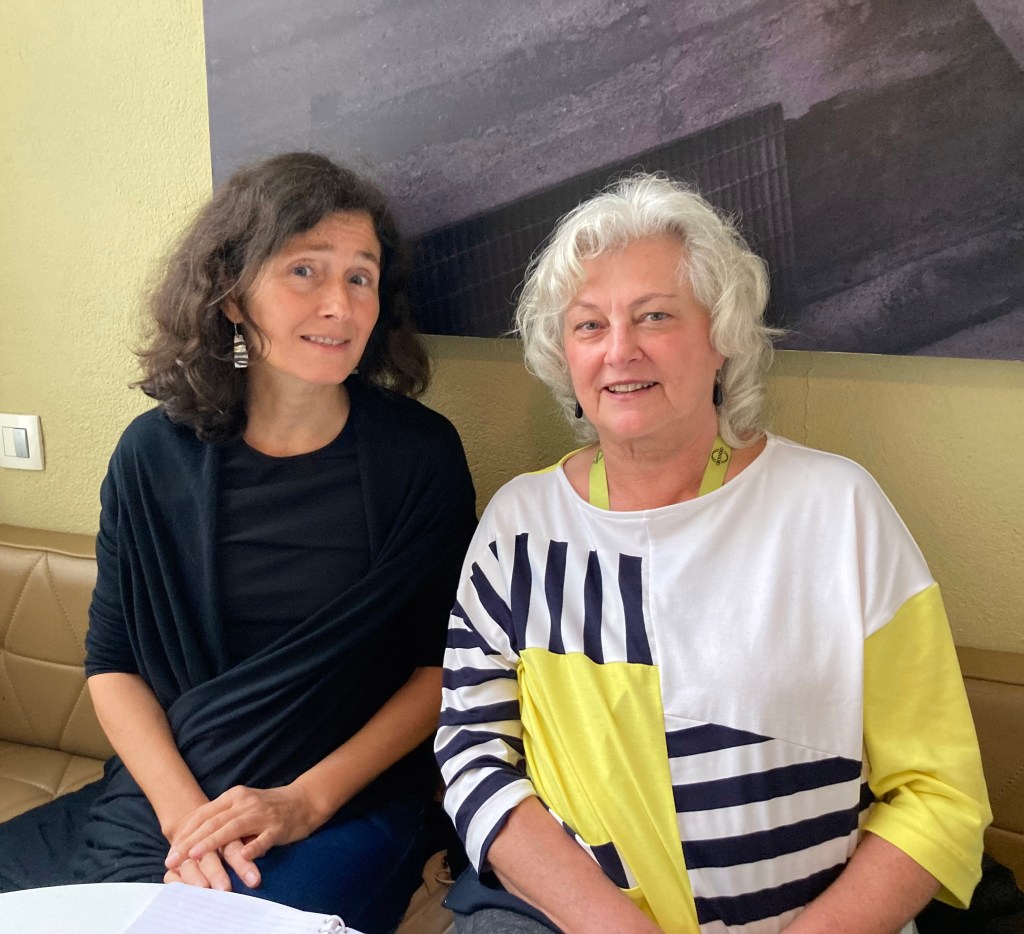
Nataša Rogelio, an anthropologist from the Slovenian Migration Institute, helps me prepare for the book presentation at the Slovenian Academy of Sciences and Arts.
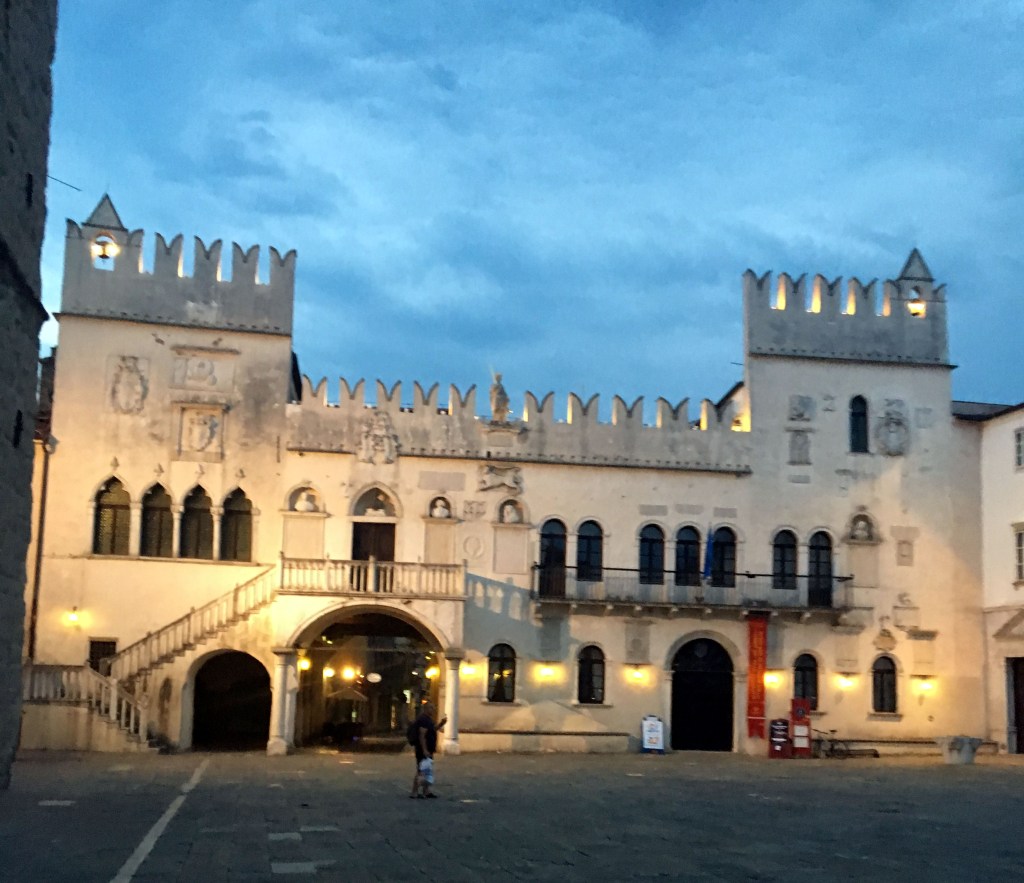
University of Primorska
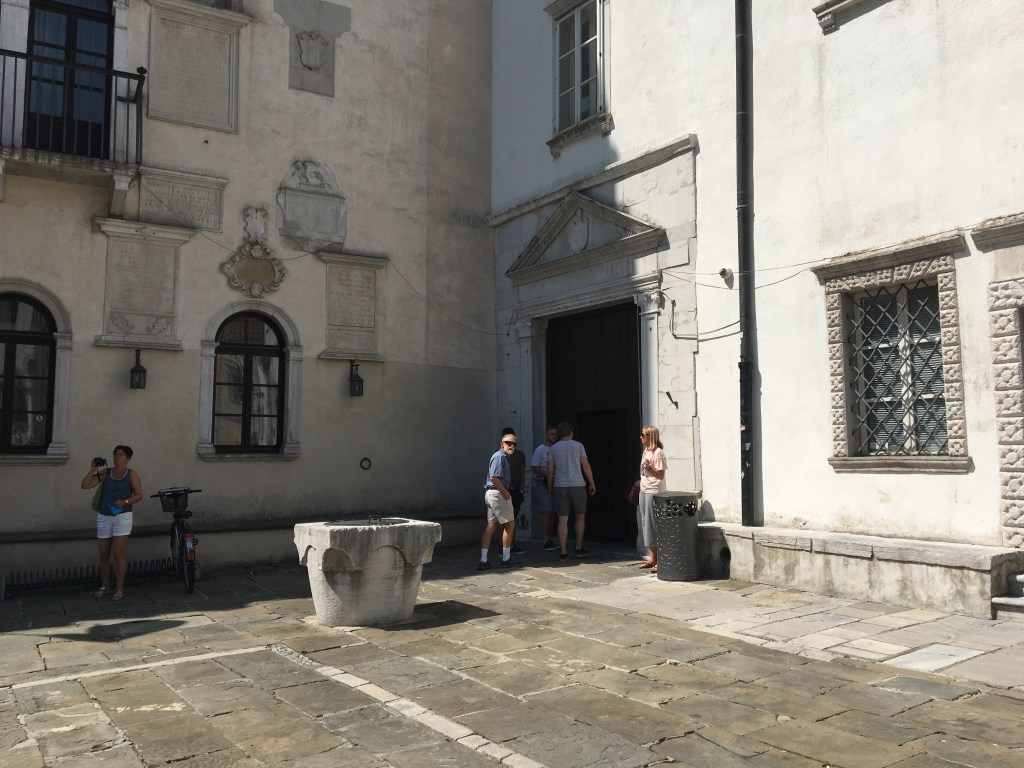
Event in Koper
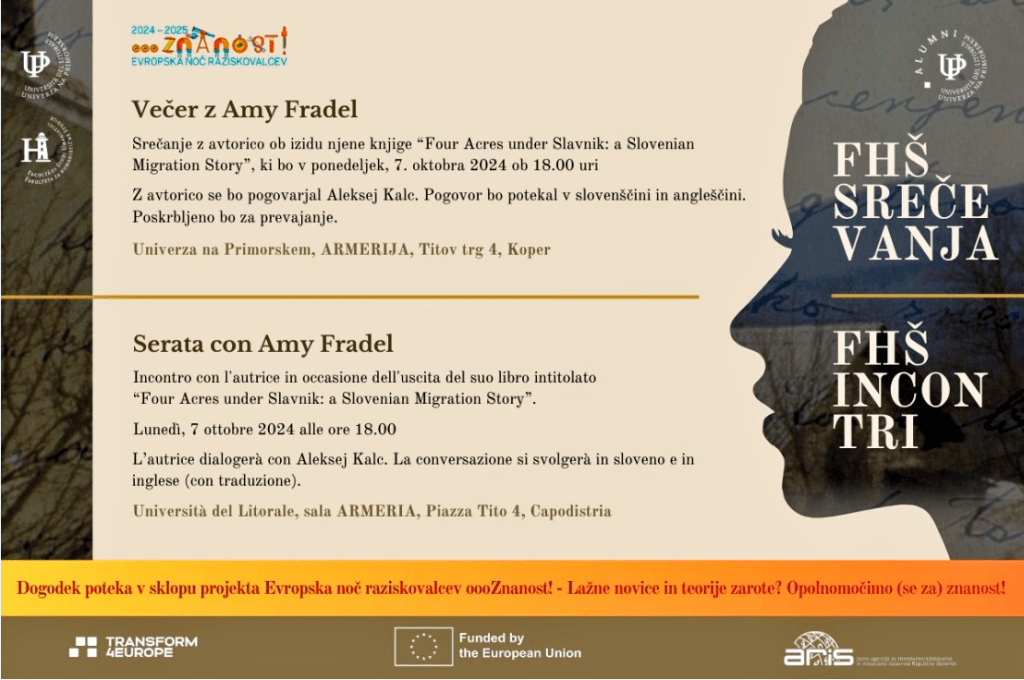
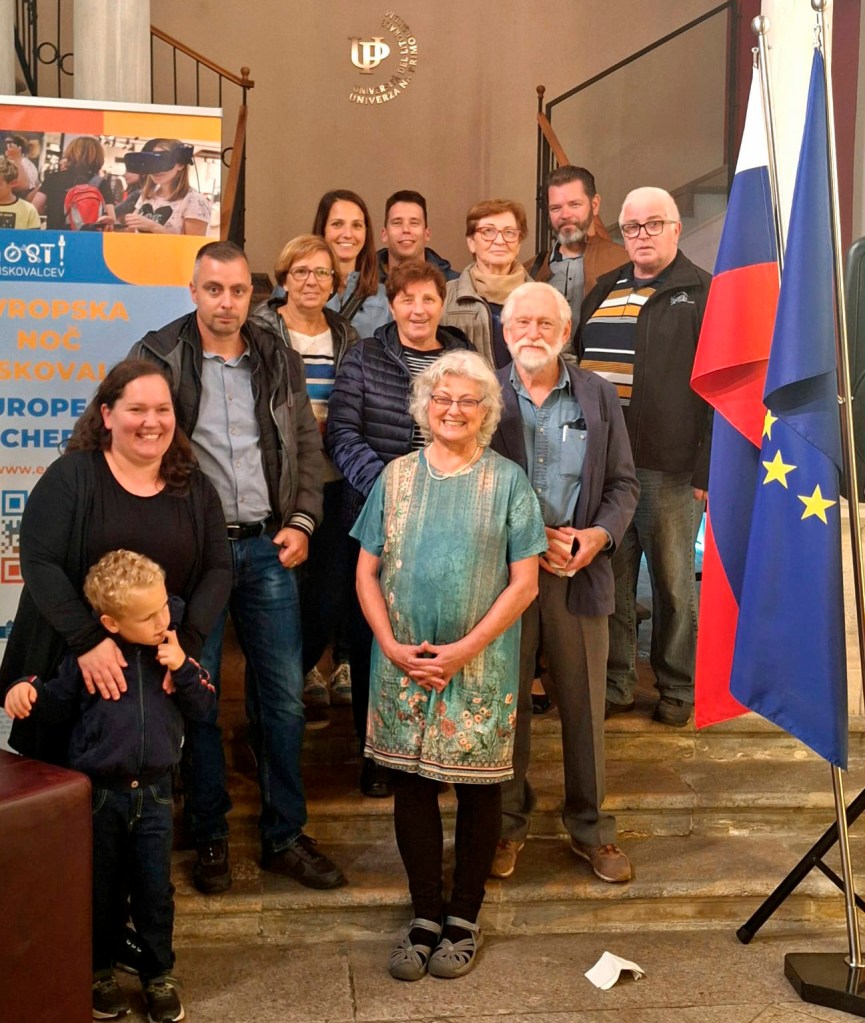
Four Acres under Slavnik takes place in a small village in Primorska and my next event took place at the University of Primorska which occupies several of the historic buildings around the central plaza of Koper. The mayor of Hprelje-Kozina made sure it was widely publicized with posters, and in local newspapers and magazines. About 70 people attended, and the presentation was in both English and Slovene. I was pleased to see about ten of my cousins and we gathered on the steps for a picture. Historian Dr. Aleksej Kalc led the interview.
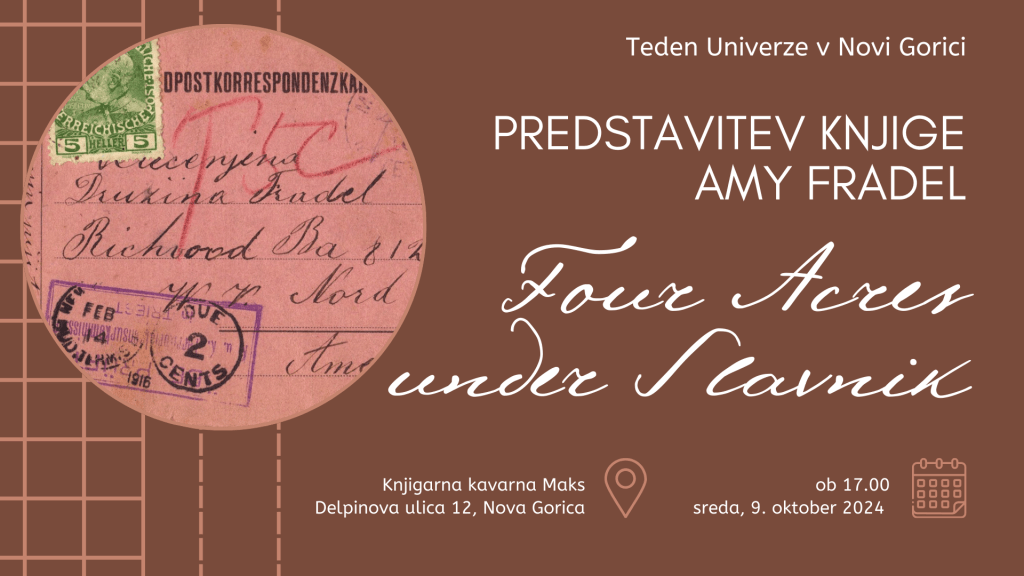
A third event took place at Maks Bookstore in Nova Gorica on the evening of October 9. The event was part of a day long symposium on the topic of Slovenian immigrant correspondence hosted by the University of Nova Gorica and the Slovenian Migration Institute of the Scientific Research Center of the Slovenian Academy of Sciences and Art. The symposium was led by Dr. Katja Mihurko, director of The European Master in Migration and Intercultural Relations Program (EMMIR) and attended by its diverse students and faculty who had read the book as part of the program and were prepared with challenging questions and comments.
Other speakers on the panel were Dr. Mirjam Milharčič Hladnik who has written widely about migration correspondence, and Joe Valencic, president of the Slovenian Union of America who has collaborated with Dr. Hladnik in her work.
Dr. Mihurko is the director of a website called pisma.org. On this site, immigrant correspondence has been collected, scanned, and presented in Slovene with English translations. I contributed 23 letters from 1913 to 1919, encompassing the experience of WWI, in a section called “Echoes Across the Atlantic: Letters of Memory of the Fradel/Fabjančič Families.” For the symposium the following review of my book appeared on the Facebook site called Pisma on October 8, 2024
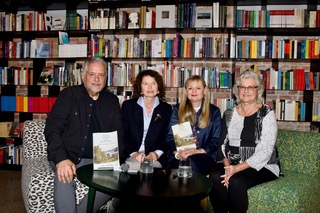
Joe Valencic, Dr. Mirjam Milharčič Hladnik, Dr.Katja Mihurko, and Amy Fradel
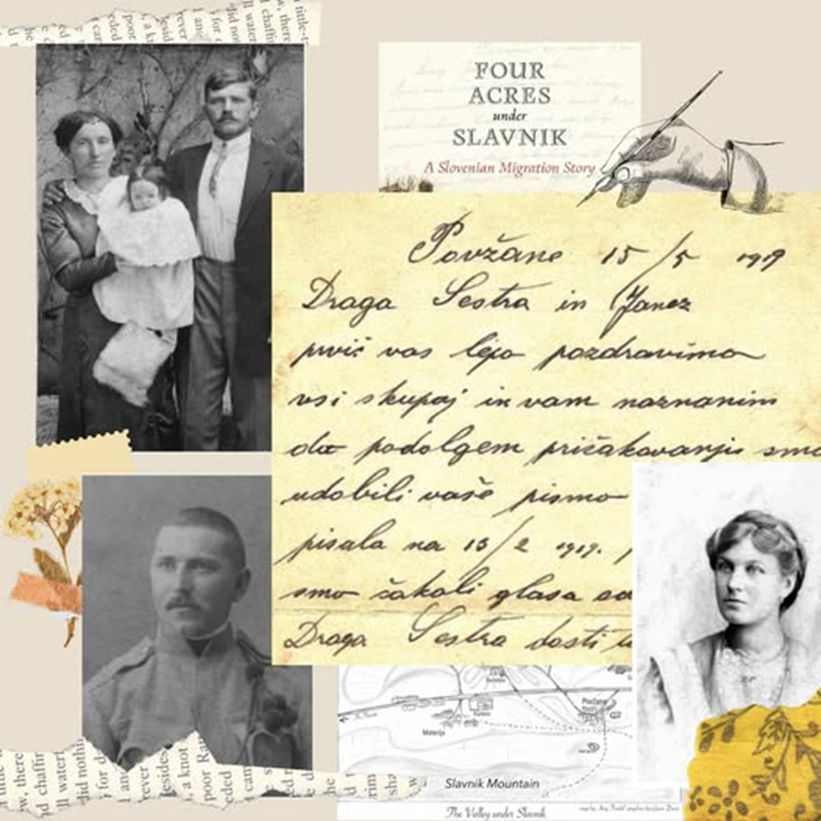
At the beginning of the 20th century, Janez and Marija Fradel moved from Slovenia to the USA, where they sought a better future. Their letters, exchanged with relatives in the homeland, documented both personal and social experiences, intertwined with intimate stories and historical and cultural contexts. The letters were “a red thread” between family members on both sides of the Atlantic. They represented a bond that transcended space and time, that was an important source of consolation for senders and recipients, as well as an invaluable source of information for later generations.
The story symbolically concludes when the granddaughter of Janez and Marija, Amy Fradel, found the letters in the attic of her mother’s house. In doing so she established a bond with her ancestors that transcends space and time. Amy Fradel reconstructed the migrant experience of her family and in her noted book Four Acres under Slavnik: A Slovenian Migration Story, captured the essence of the culture of memory. The work documents the journey of John and Mary, bringing their stories to life and deepening the exploration of their hopes, challenges and adjustments in the new world.
The legacy of Janez and Marija Fradel lives on, woven into the lives of their descendants. With her book, Amy ensures that the sacrifices and dreams of her ancestors don’t just remain echoes of the past, but become living narratives that shape the identity of future generations.
— Sara Vukotič
 AMY FRADEL